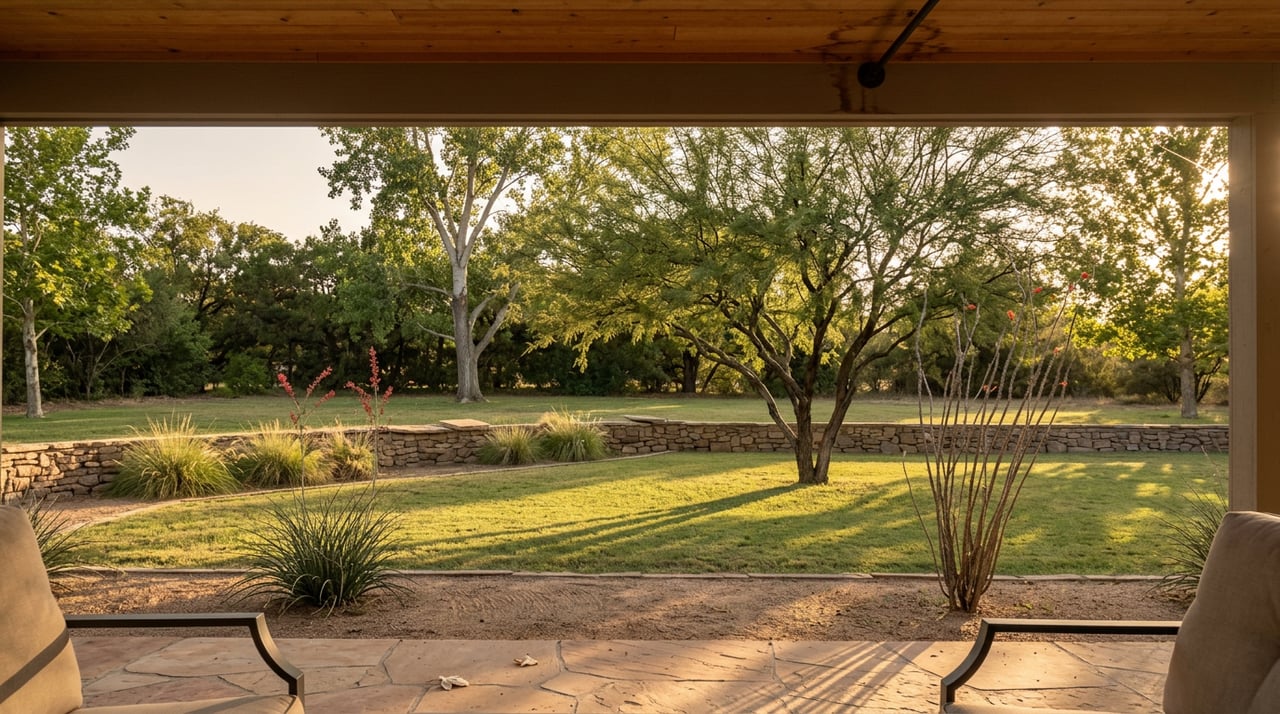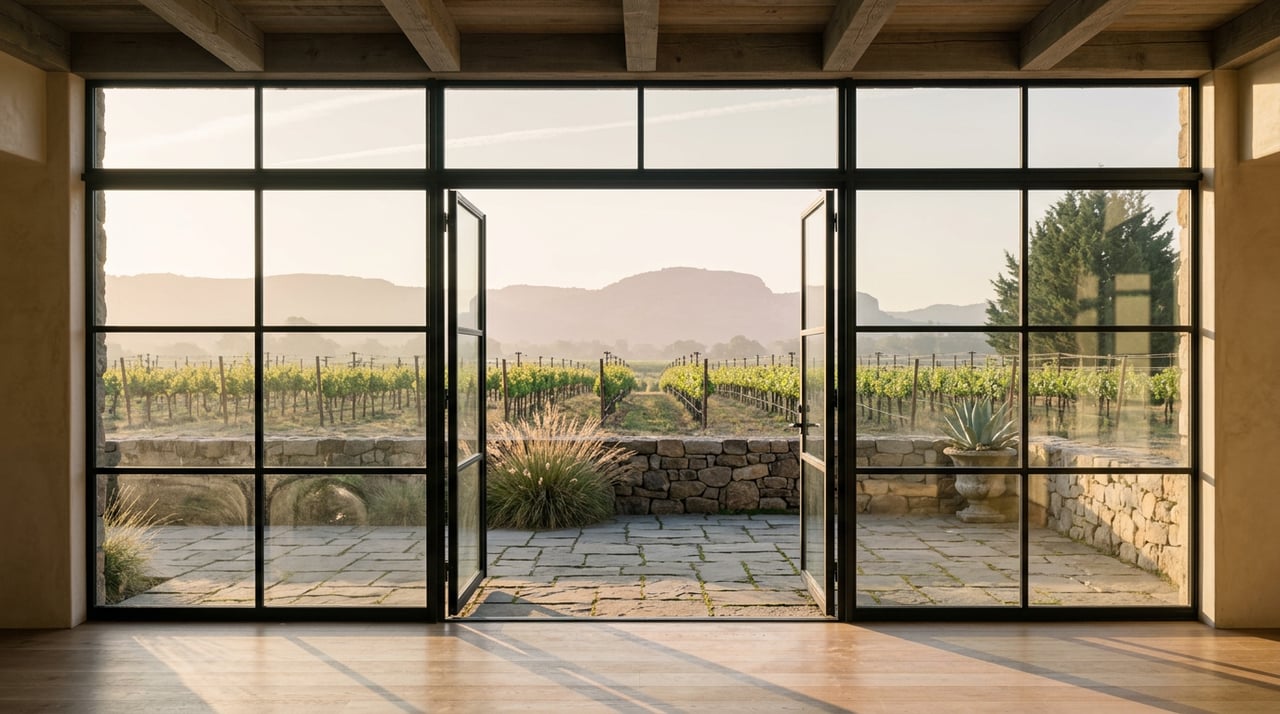
Drive out to Page Springs Cellars this year for a glass of Syrah on the veranda above Oak Creek, and you'll notice a door near the tasting room that used to lead to storage. It doesn't anymore. Since earlier this year, that room holds twenty curated collections of corkscrews, some dating back to 1760, arranged by geography and by story. It is called the Wineleopard Corkscrew Gallery, and it is one of only a handful of dedicated corkscrew museums in the United States.
That sentence alone tells you something about how Cornville and Page Springs actually work. Nobody built a visitor center for this. Nobody ran a capital campaign. A winery already open for business added a room, and now the room is the reason some people stop.
What's Actually in the Room
Eric Glomski, who founded Page Springs Cellars in 2003 and is now in his third decade of winemaking, partnered with longtime friend Robert Leopardi to put the collection on public display. Leopardi lives in Tucson and has spent more than 40 years in the wine business, mostly in sales. Collecting corkscrews started, by his own account, as a side effect of collecting American Arts and Crafts antiques. Somewhere along the way the corkscrews took over.
The gallery groups the pieces into 20 separate collections, each with its own notes and history, spanning from the mid-1700s through the mid-20th century. Leopardi has described the room as covering roughly 15 percent of his total personal collection, which means the version open to the public at 1500 N. Page Springs Road is the edited cut of something much larger still sitting somewhere else. He has called it the most serious dedicated corkscrew museum in the country.
Sarah Alyea, who represents Stem Wine Company and attended the opening, put it this way to a reporter covering the launch:
"I'm so impressed but also excited to learn about all the different places he has collected corkscrews. The dedication and passion that he has for corkscrews is just incredible. My favorite was the leg corkscrews."
That's the kind of reaction a place gets when the thing on display was never designed to be a tourist draw in the first place. It was a private obsession that happened to need a room, and a winery happened to have one.
A Landmark That Didn't Need a Main Street
Cornville and Page Springs don't have a walkable downtown the way Cottonwood or Uptown Sedona do. There's no strip of storefronts where a new business simply opens a door on Main Street. What this stretch of the Verde Valley has instead is a scatter of working properties along Page Springs Road and the banks of Oak Creek: the winery, Page Springs Fish Hatchery a short distance away, Bubbling Ponds Fish Hatchery, a handful of ranches and vineyards tucked into the same few miles of road.
That geography changes how something new gets added to the area's cultural life. There's no empty retail space waiting for a tenant. What happens instead is that an existing property, one that's already drawing people for wine or fish or horseback rides, absorbs the new thing. A corkscrew museum doesn't need its own building and parking lot when a working winery already has both.
If you live here, you've probably already priced this pattern into how you think about what's nearby. The interesting new thing in Cornville rarely announces itself with a ribbon-cutting on a public street. It shows up as an addition to a property you already knew about.
The Same Address Also Runs the Area's Biggest Fundraiser
Page Springs Cellars isn't just hosting a new museum this year. It's also the site of Tilted Earth, the winery's annual summer solstice wine and music festival, which has run for several years and typically brings in Page Springs Cellars alongside other Northern Arizona wineries for a weekend of live music, food, and a silent auction. The festival has historically raised between $10,000 and $20,000 a year for two named nonprofits: Yavapai Big Brothers Big Sisters and Friends of the Verde River.
This year's edition already came and went in June, so if you missed it, the next chance is roughly nine months out. But the detail worth holding onto isn't the calendar date. It's that the same working winery hosting a corkscrew collector's life's work is also the same property funding two community nonprofits every summer. In a place without a chamber of commerce running a public events calendar, the wineries themselves have become the informal civic infrastructure. Watch the property, not the town square.
What's Actually Coming Up This Fall
For something on the near-term calendar rather than next summer's, the Verde Valley Pottery Festival is scheduled for November 13 through 15, 2026, in Cornville. It's a different kind of event from the winery-hosted gatherings, but it fits the same pattern: a specific, recurring, small-footprint event that residents track by name rather than by browsing a regional tourism site.
If you're the kind of resident who plans a fall weekend around what's actually happening nearby instead of what a search engine surfaces, that's the date to put on the calendar now, before the wine country articles start recycling generic listicles about the Verde Valley Wine Trail.
The Pattern, Named
None of this makes Cornville and Page Springs unusual by accident. It's a place built around a handful of working properties rather than a commercial strip, and every addition to its cultural life tends to attach itself to one of those properties rather than standing alone. A corkscrew collector's forty years of accumulation found a home behind a tasting room. A solstice festival that funds two nonprofits happens at the same address every June. A pottery festival draws people to Cornville in November without needing a downtown to hold it.
If you already live here, none of this is a discovery so much as a confirmation of something you'd probably already sensed: the way to keep up with what's new in this stretch of the Verde Valley is to keep an eye on the same few working properties, not a public calendar.
Katrin Themlitz has spent more than 20 years working this same stretch of the Verde Valley, and her ties to the area go beyond real estate. As founder and director of the Sedona Community Farmers Market, she's built a career on paying attention to exactly this kind of local detail, the kind that never makes it into a generic wine country roundup. If you're weighing a move to Cornville, Page Springs, or anywhere else in Sedona and the Verde Valley and want someone who already knows which properties matter and why, Katrin Themlitz is worth a conversation. Let's Connect.